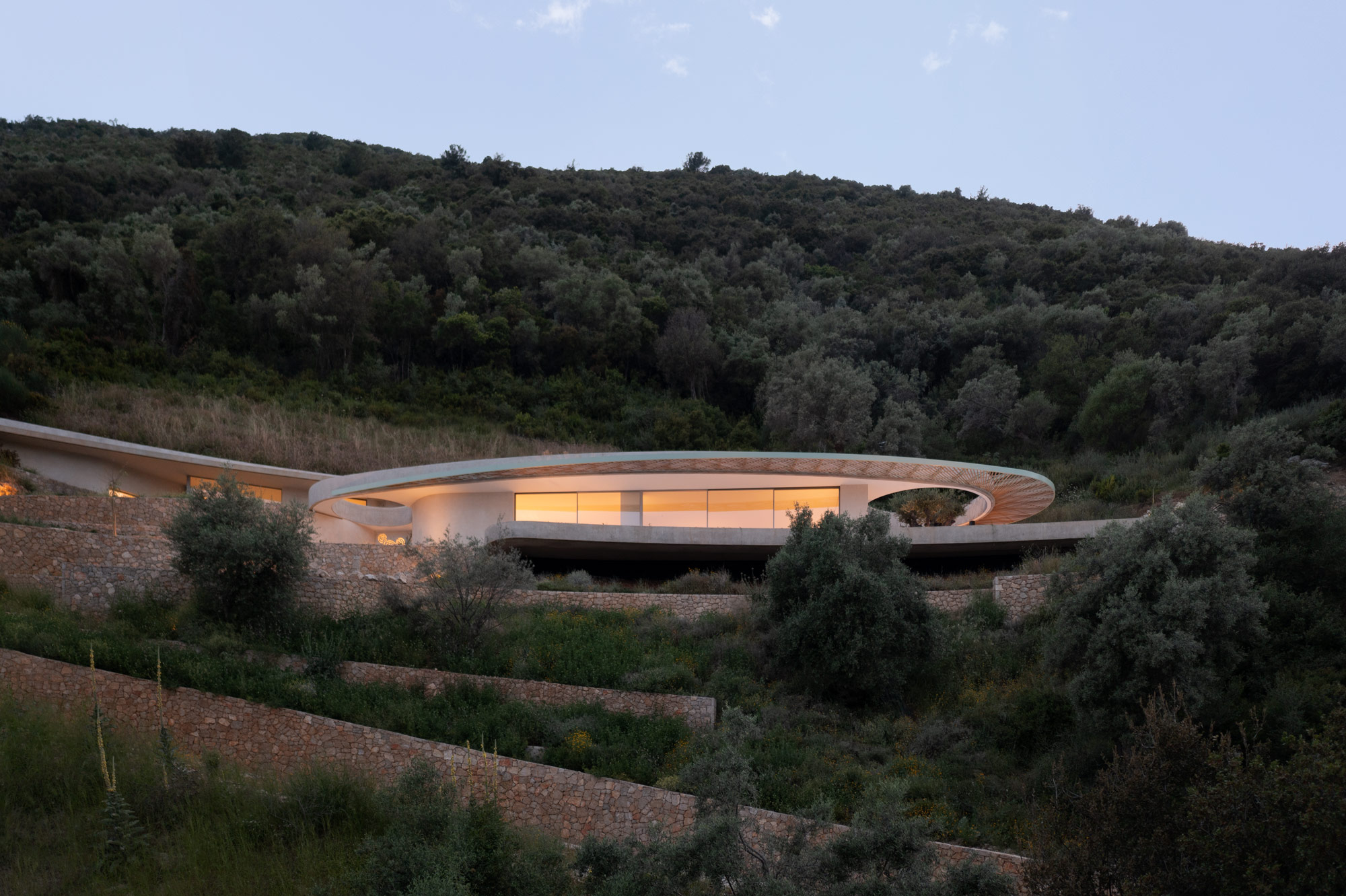
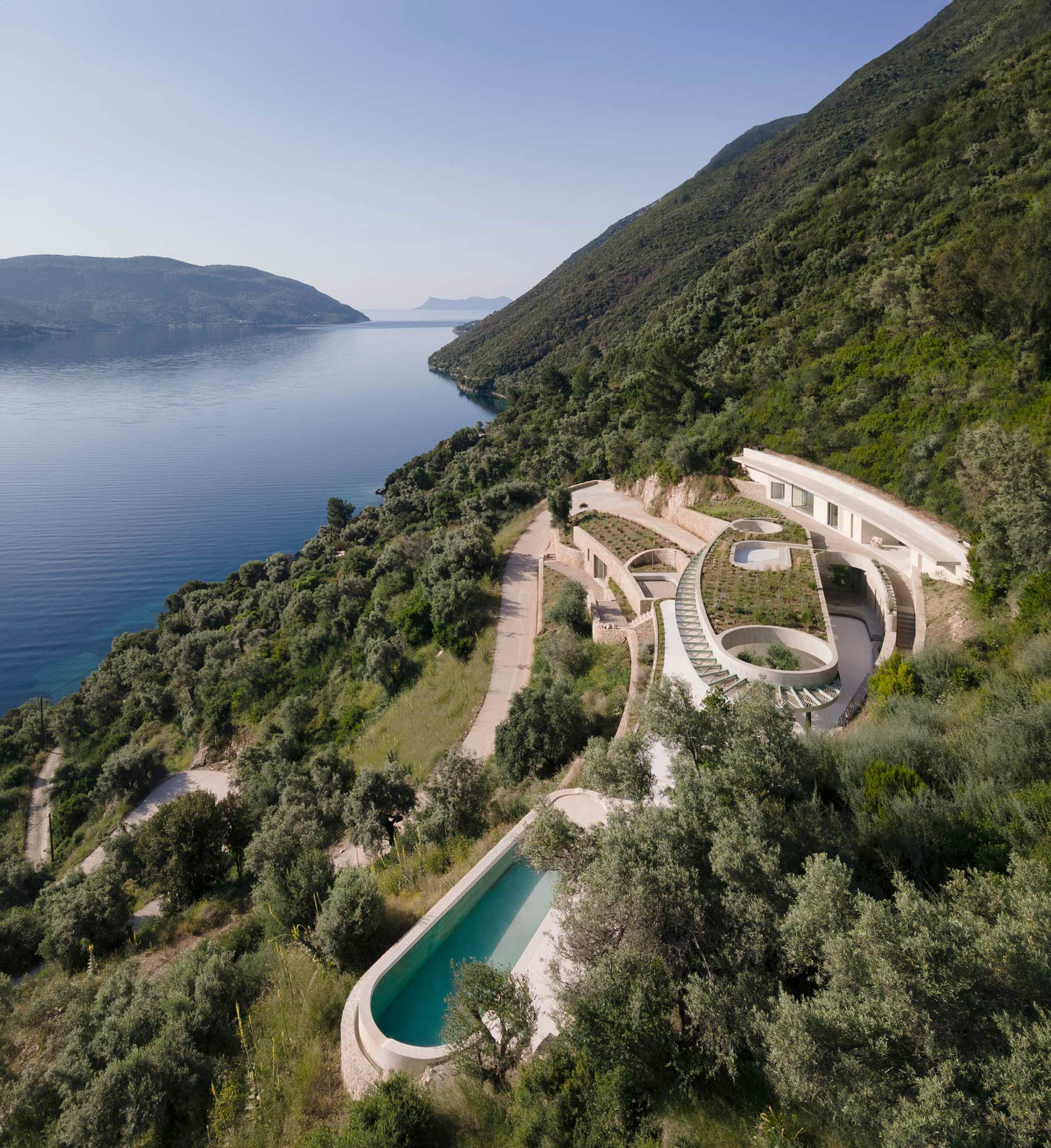
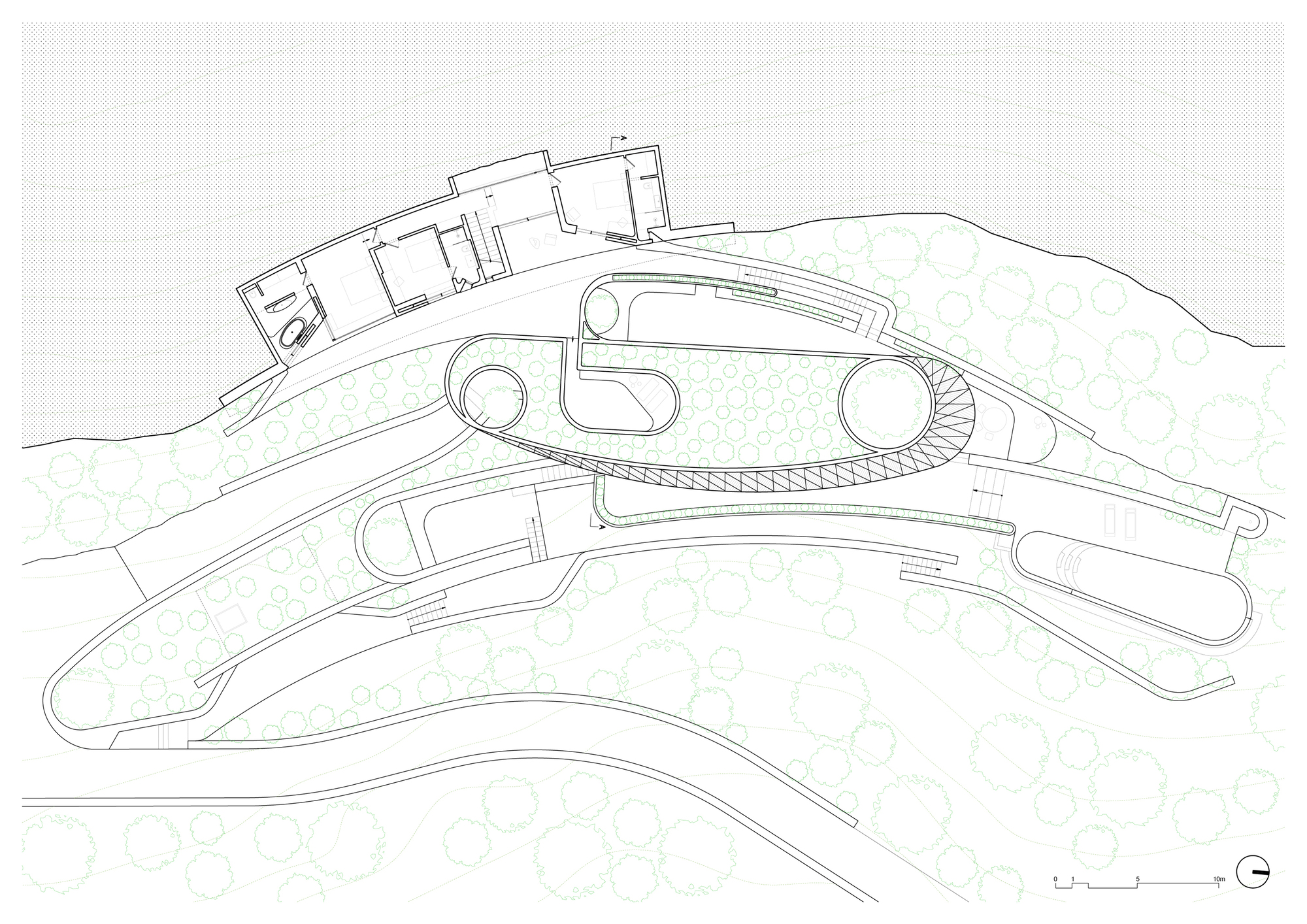
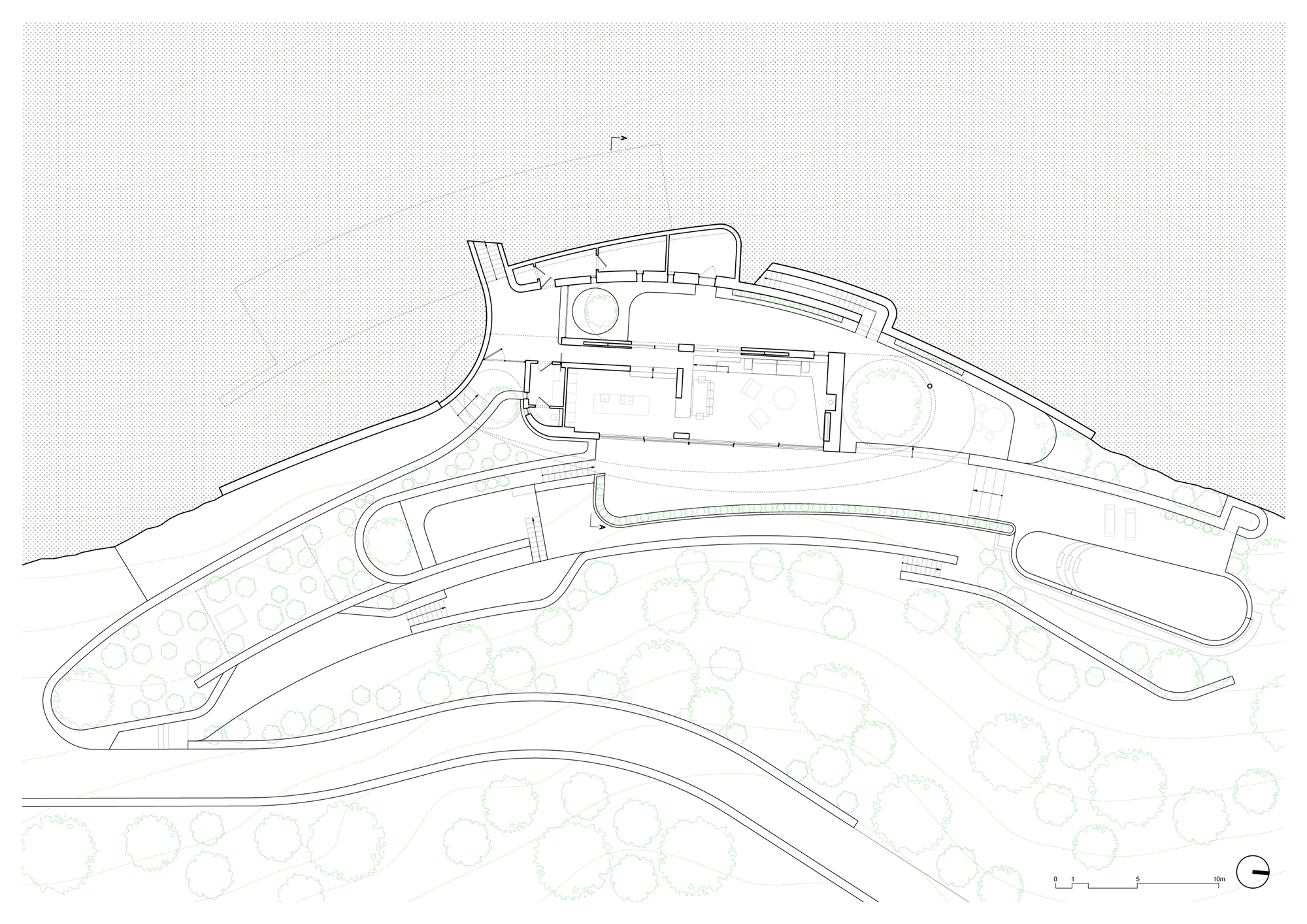
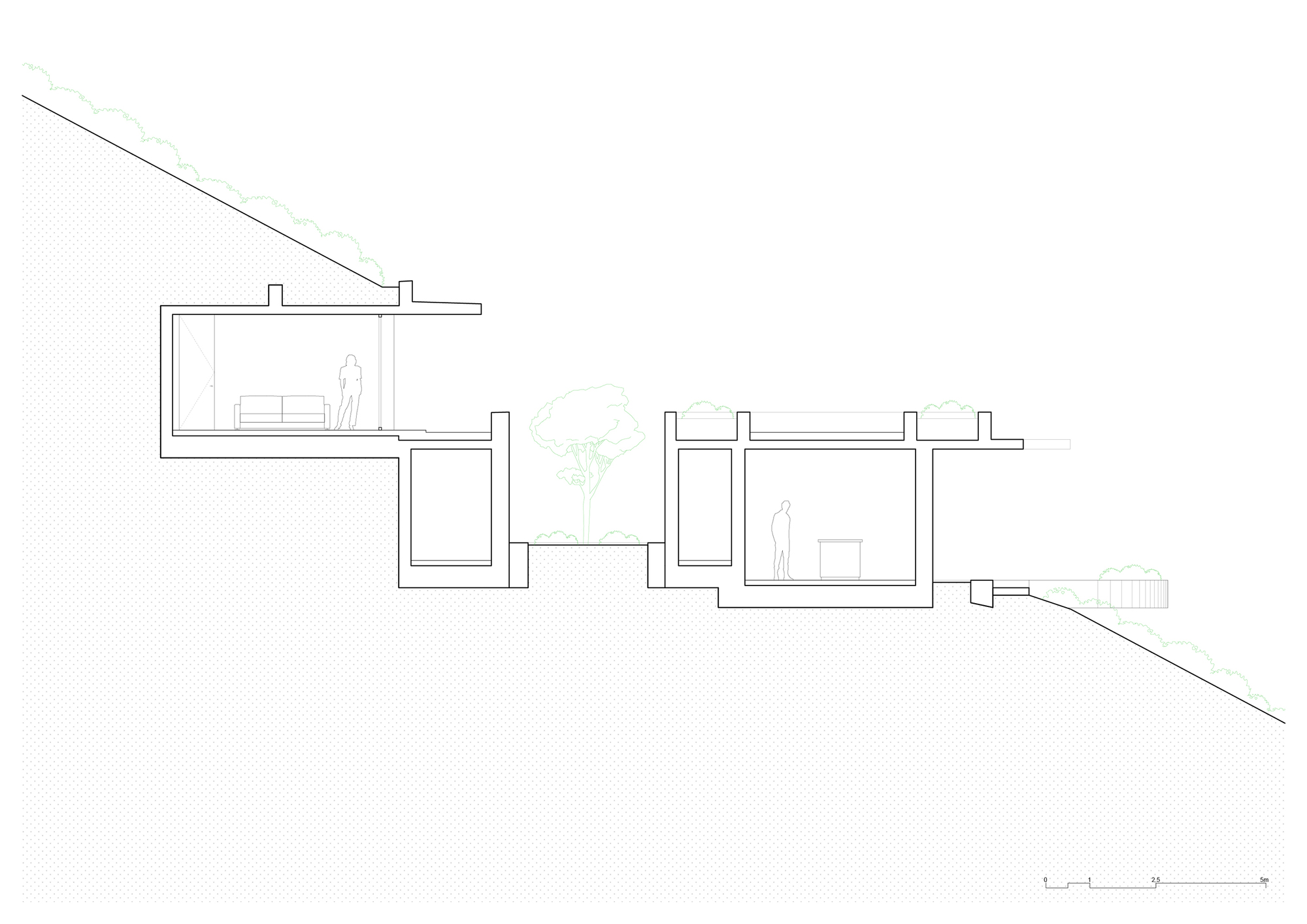
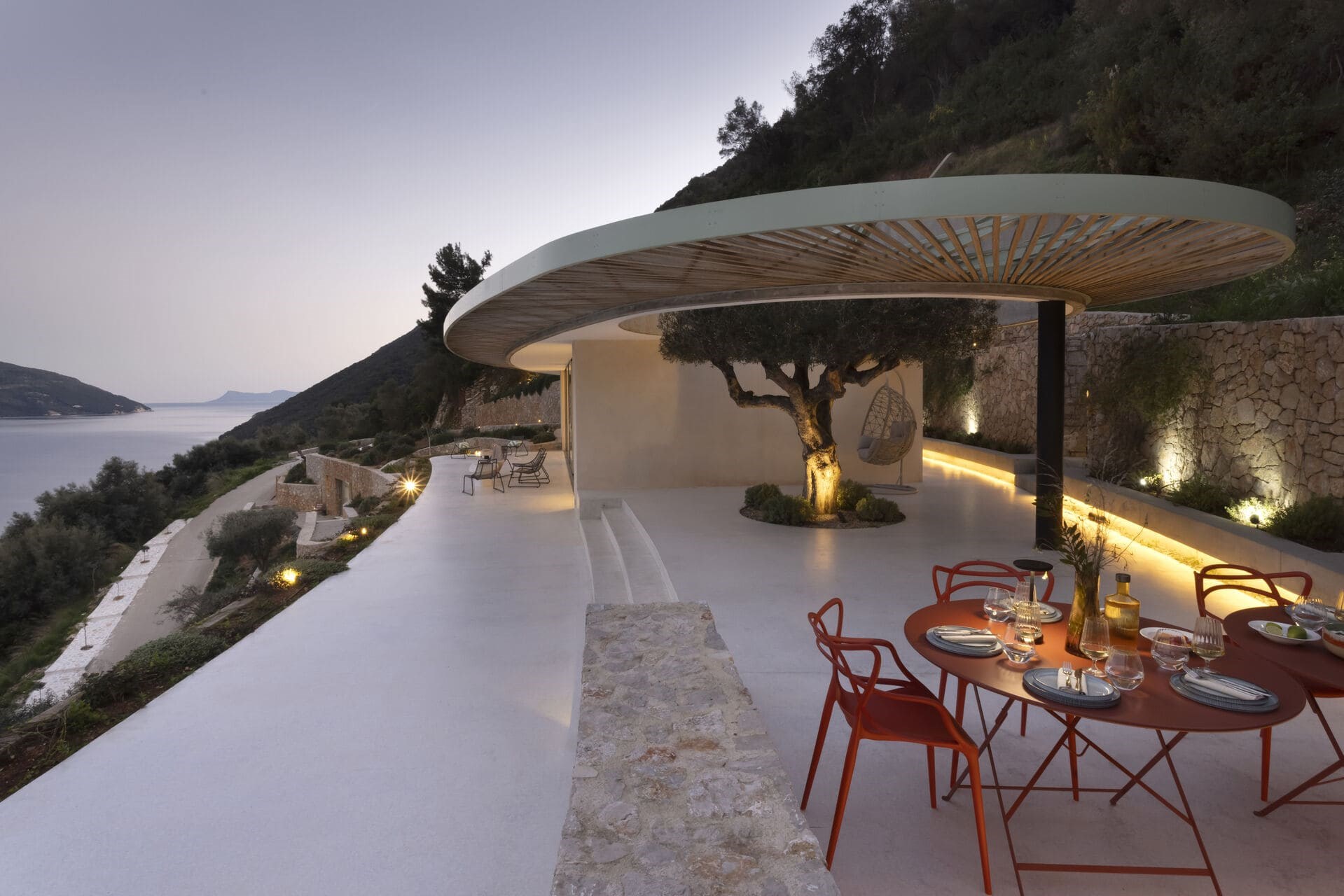
The site features a mountainous natural landscape covered with wild scrubs and olive trees, overlooking one of the most beautiful panoramas of the island. Designed as a retreat for a local family, the project is partially hidden into the terrain — a combination of overlapping volumes reducing the elevation as seen from the sea. The house deploys linearly on two levels following the curvature of the mountain profile.
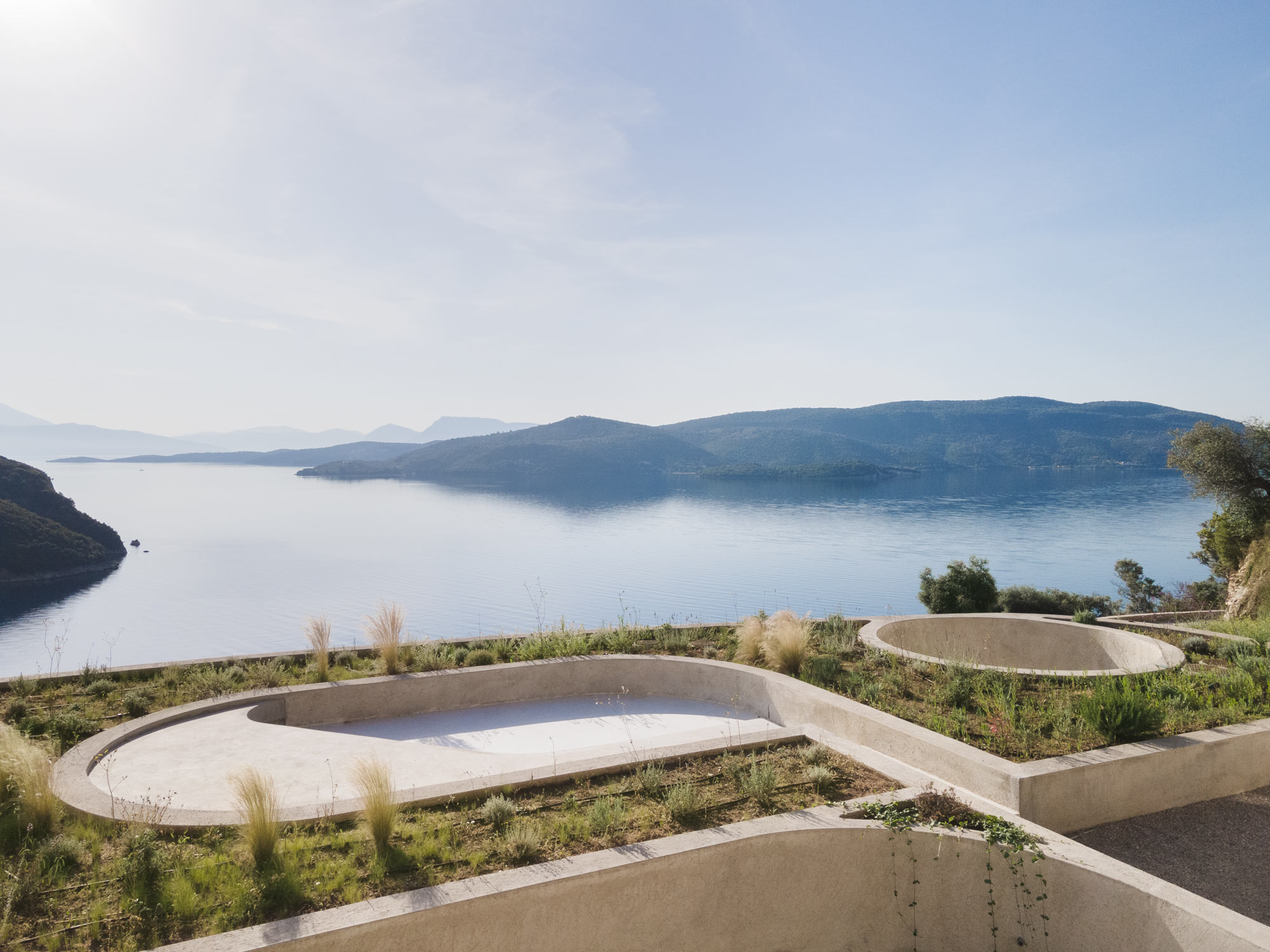
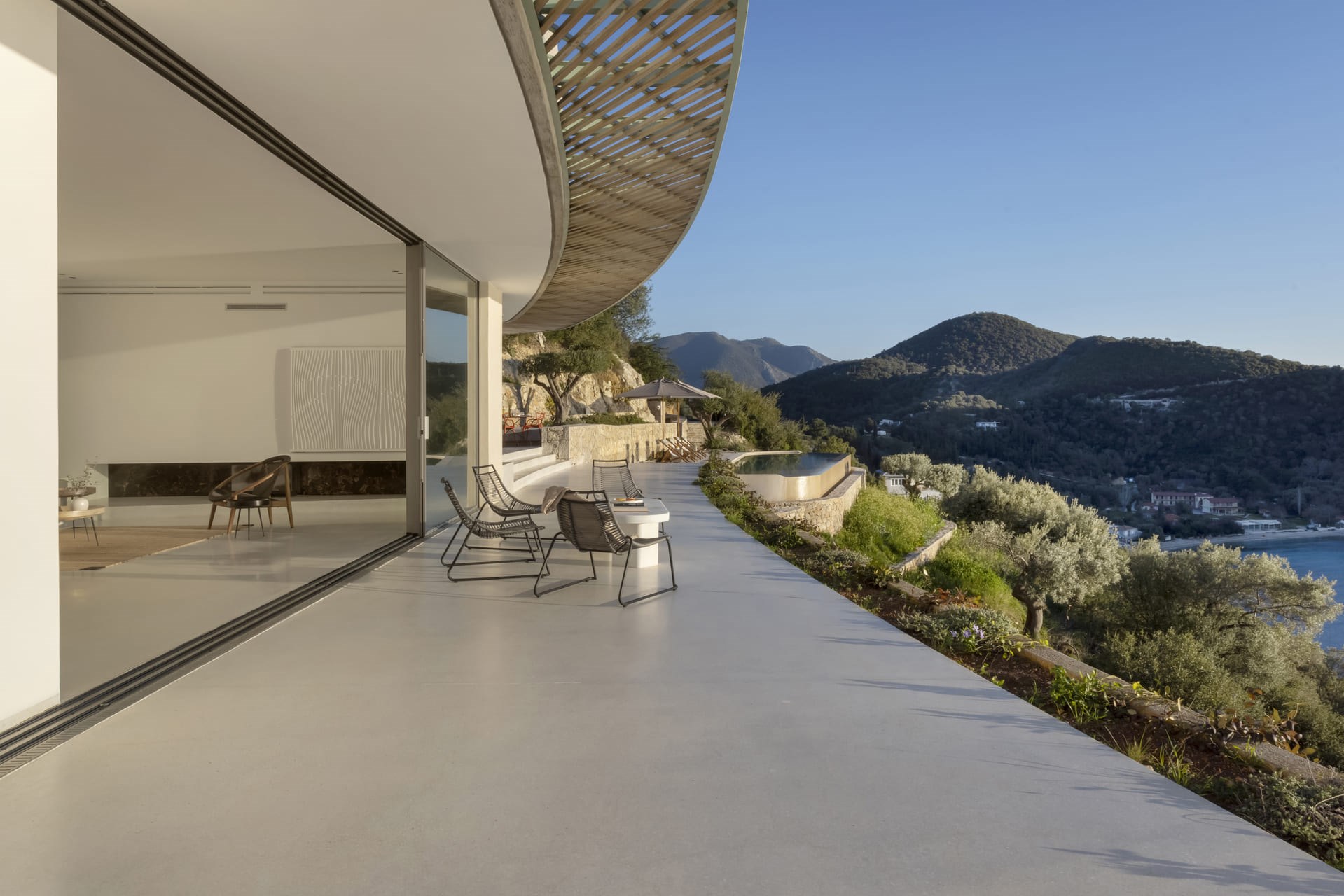
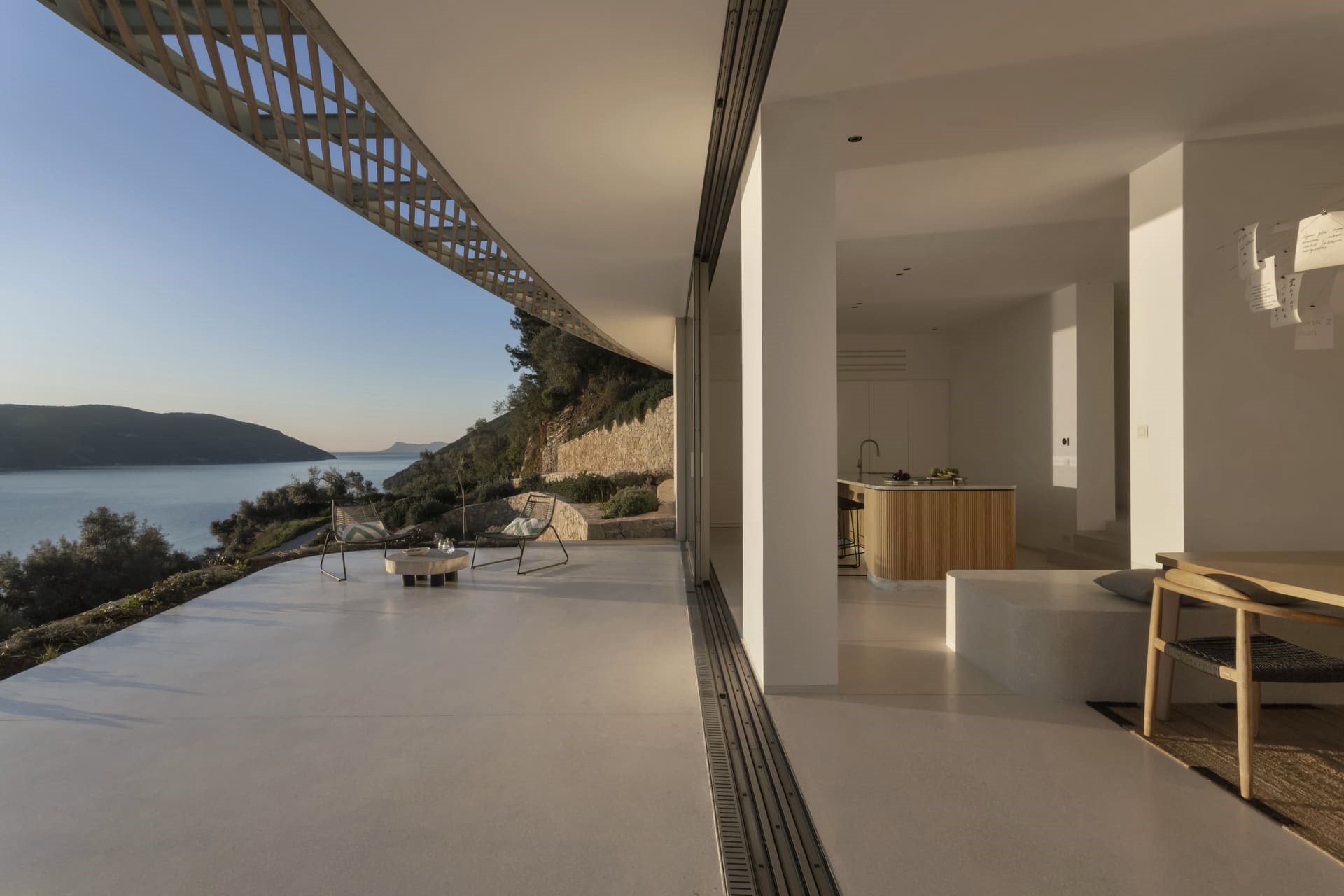
When entering the house, one walks into a world that projects the gaze toward the ravine and the glittering lights of the sea. The curved and sinuous lines accompany the discovery little by little. A key objective of the design is to seamlessly extend the interior spaces into a multitude of outdoor living areas: the terraces, the loggia, the pool area, and the courtyard.
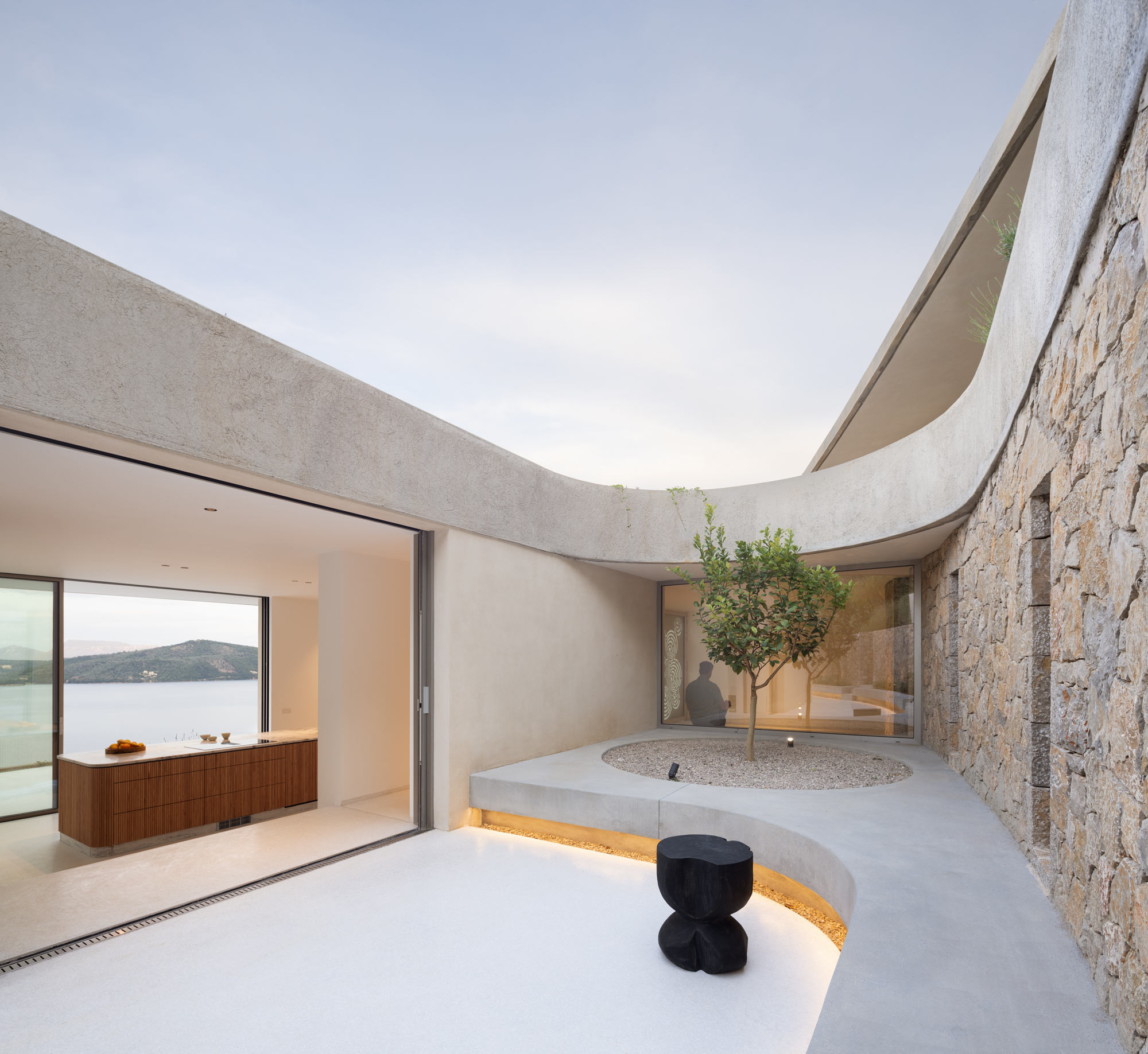
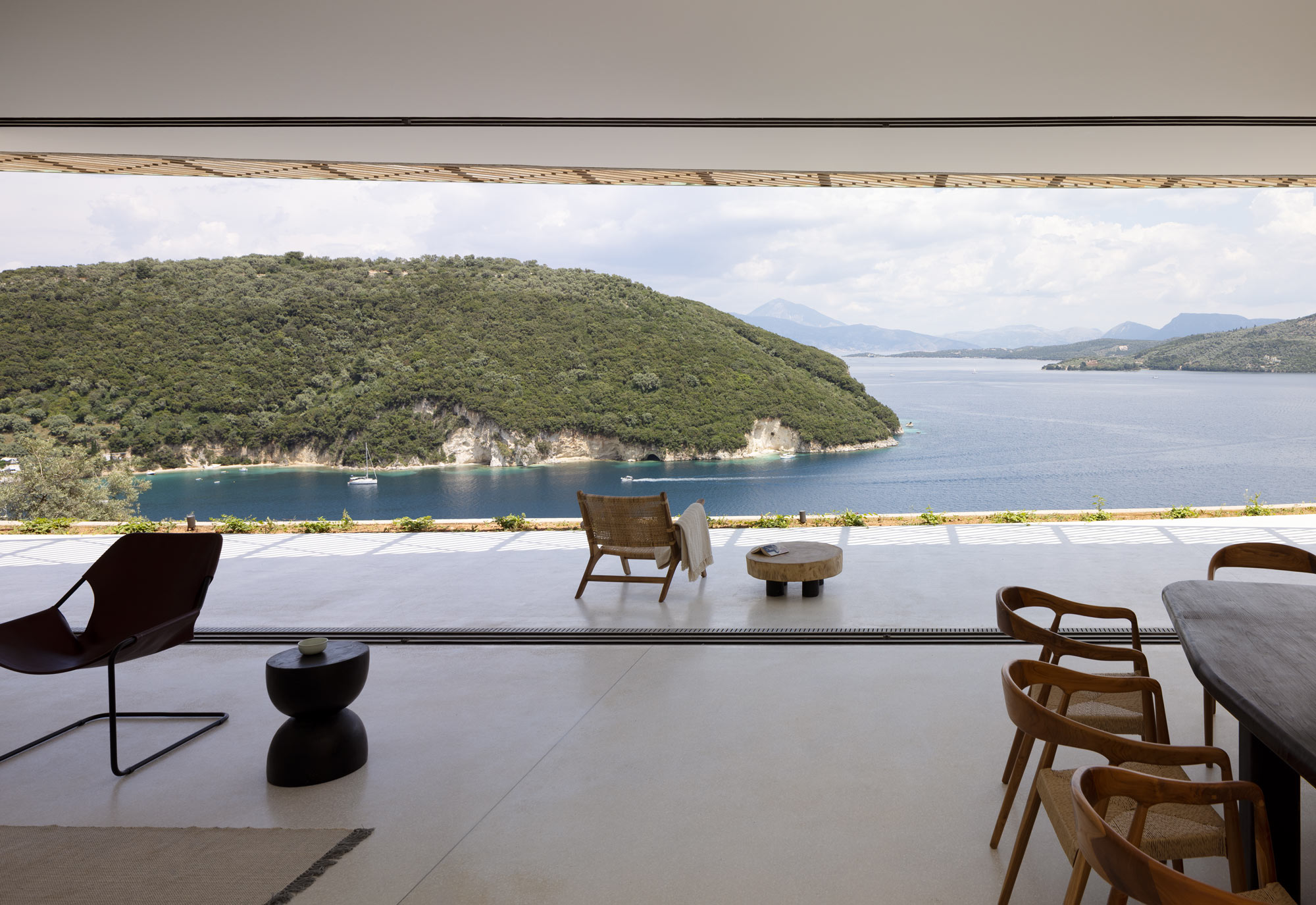
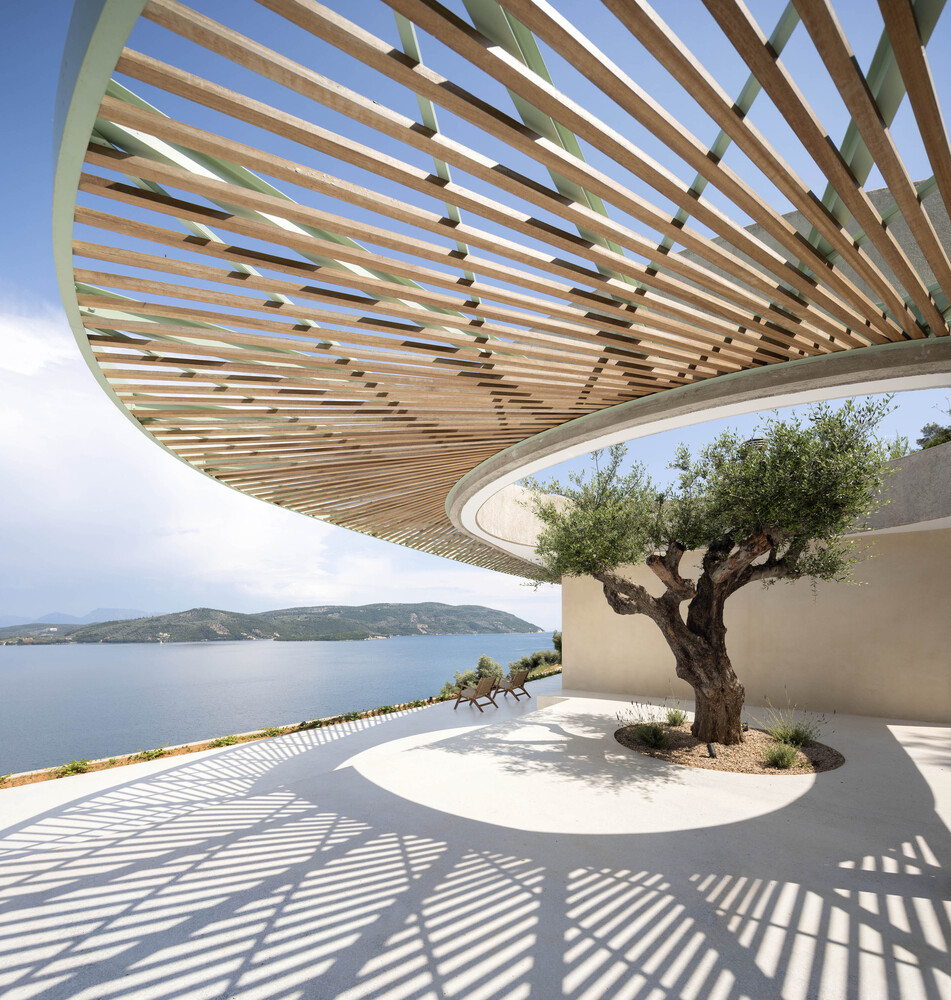
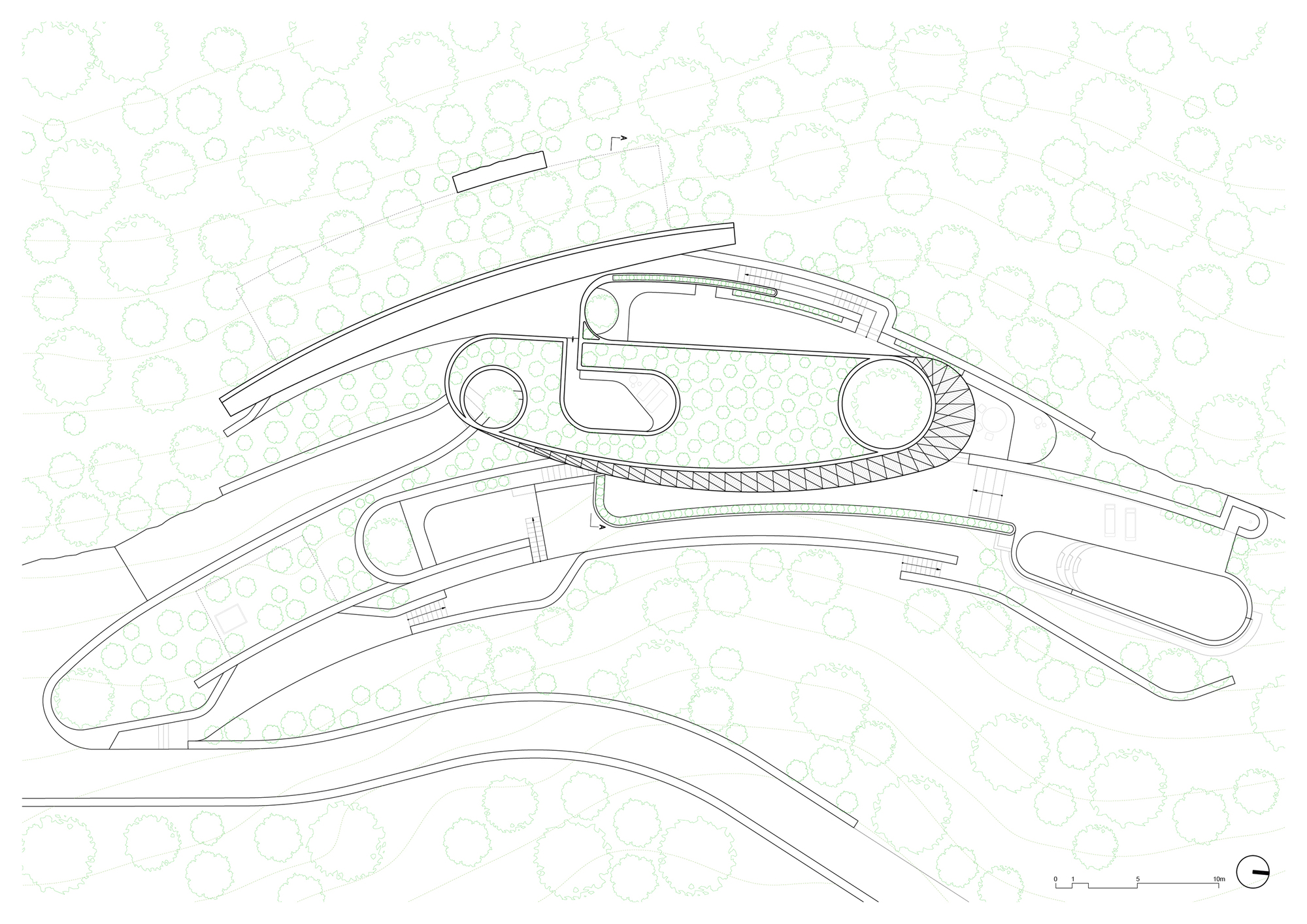
An elliptical concrete beam delineates the common areas of the house, while the bedroom areas are inserted within the topography on the upper floor. The living room and kitchen are spacious — conceived as a pavilion, open to all sides. The detachment of the living room from the sloping terrain allows for the creation of a courtyard garden that provides shading while emphasising views of the mountain and sky. The elliptical roof is punctured by two oculi that frame olive trees. A column-free pergola extends the shade and the framing of the sea.
The lower level integrates a studio within one of the stone retaining walls that structure the landscape. The planted roof provides protection from direct sunlight throughout the day. The living room, designed to be open on both sides, allows the refreshing northern wind to naturally ventilate the house during the evening hours.
A combination of different tones of neutral colours — various shades of blue, grey, and green — delineates the project subtly and facilitates its insertion into the surrounding landscape. The garden comprises a blend of native coastal vegetation: wild olive trees, shrubs, and small aromatic gardens, creating a captivating sensory experience.